

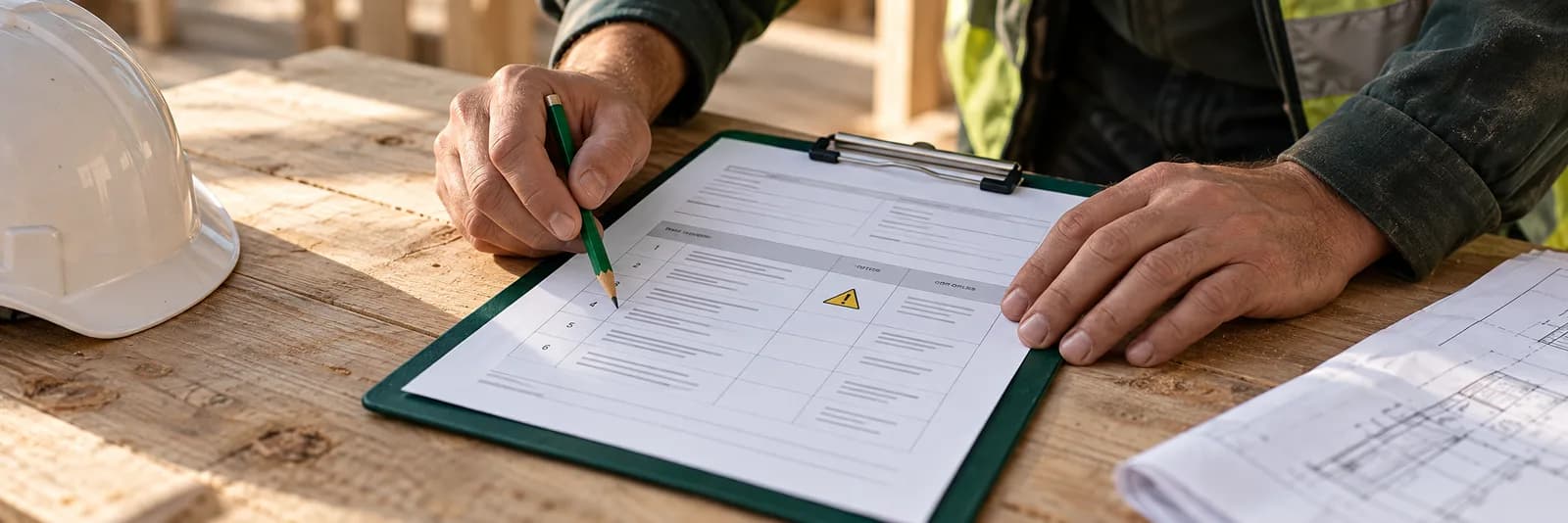
Been asked for RAMS? Start here
Ask your client or main contractor for their site rules and any form they want you to use.
- Confirm the job, location and start date.
- Find out who else will be nearby and what site risks affect your work.
- List your work steps, what could go wrong and how you will prevent harm.
- Have someone who understands the job check the plan. Brief your team before work starts.
A simple example
You are fitting cable in an occupied office.
Risk assessment: Someone could trip on loose cable in the corridor.
Method statement: Agree a separate walking route before unpacking. Keep cable inside the work area and the route clear. If you cannot keep people away, stop and agree a different plan.
What should RAMS include?
Use this as a starting checklist. Add anything else your job needs, such as permits, drawings or a COSHH assessment for hazardous substances.
- Job details: What you are doing, where, when and who is in charge.
- Hazards: What could hurt someone, who could be harmed and how.
- Safety measures: What you will do to reduce each risk, and who will do it.
- Work steps: How you will set up, do the job and clear up afterwards.
- People and equipment: Who is doing the work, their training, tools and protective equipment (PPE).
- Site rules and emergencies: Safe access, other people working nearby and what to do if something goes wrong.
- Checks and briefing: Who checks the plan and how you will explain it to the team before starting.
Need help putting it together?
RAMSCloud gives you a structured editor for job details, hazard selection, work steps and method statement information. You still need to check that the content fits your job.
See how the RAMS builder worksAre RAMS a legal requirement?
Not every job legally needs a document called RAMS. Employers must still assess risks and take steps to protect people. Your client may also require written RAMS before you start.
If you employ five or more people, you must record the main findings of your risk assessment. Smaller businesses still need to assess and manage risks.
Some work has specific rules. HSE says written arrangements are needed before demolition, dismantling or structural alteration. Check the requirements for your work.
Source: HSE: Construction administration and method statements · Risk assessment recording guidance
Can I write my own RAMS?
Yes, if you have the skills, knowledge and experience to assess the work and choose suitable safety measures. Ask the people doing the job for their input. Get help if you do not have the knowledge needed.
A template or app can help you organise the document. It cannot check the site or decide whether your plan is safe.
Source: HSE: Appoint a competent person
Can I reuse RAMS from another job?
Use them as a starting point. Check the new site, task, people and equipment. Changing the address alone is not enough.
Review the plan if the job changes, the safety measures are not working, or an accident or near miss shows a problem. Update the document and tell the team what has changed.
Source: HSE: Steps needed to manage risk
Sources
Read the full guidance for more detail.